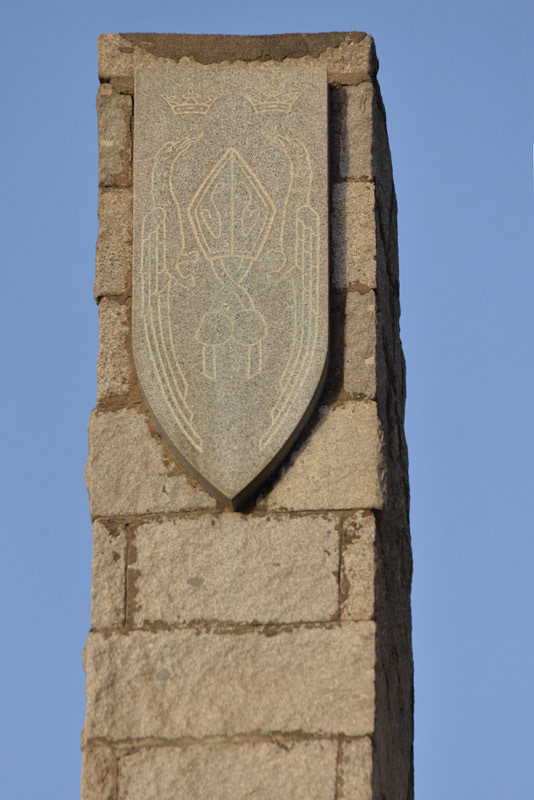
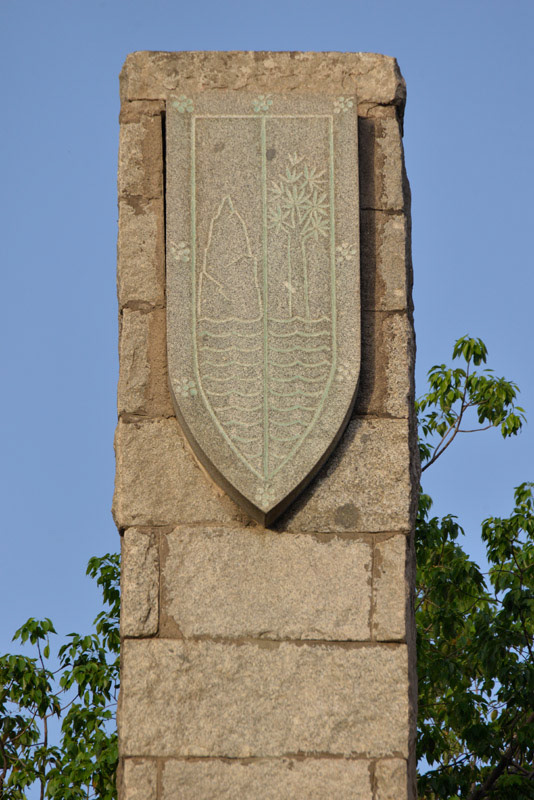
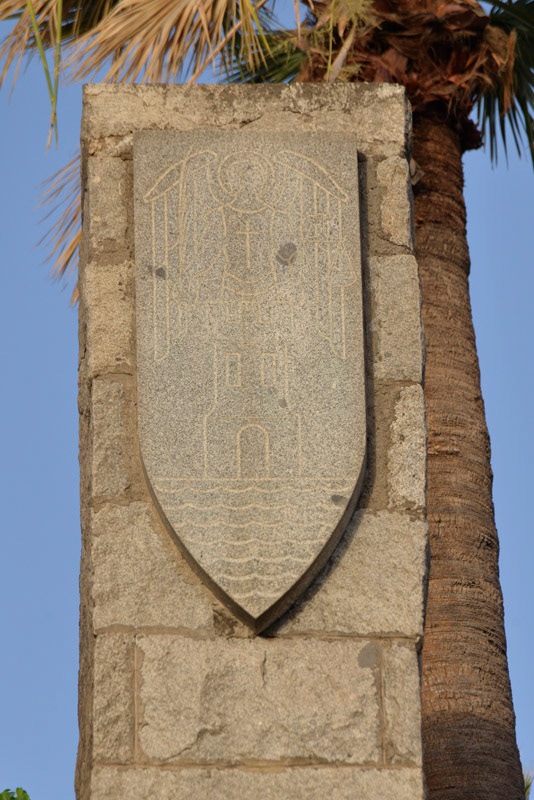
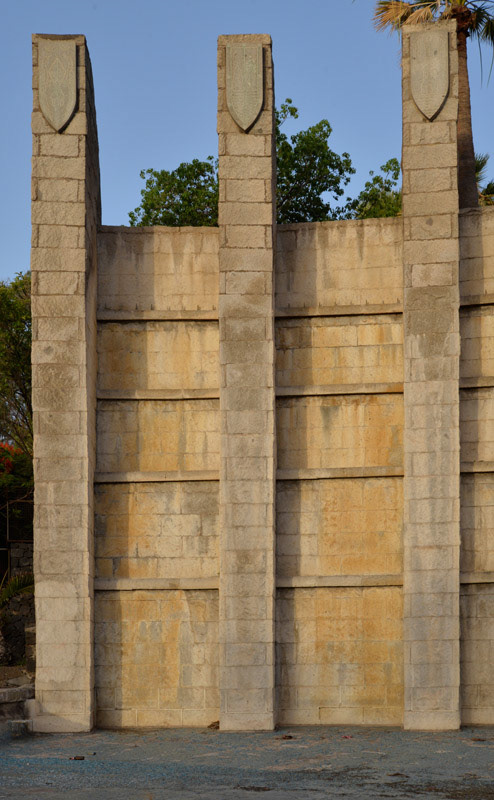
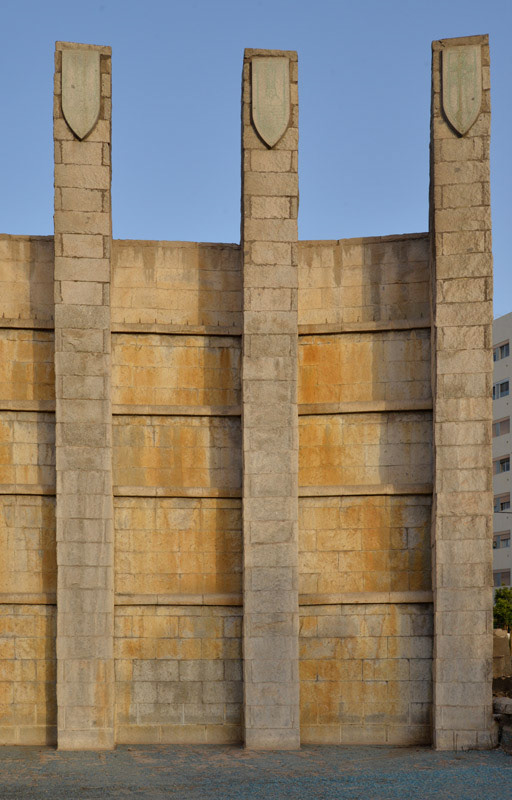
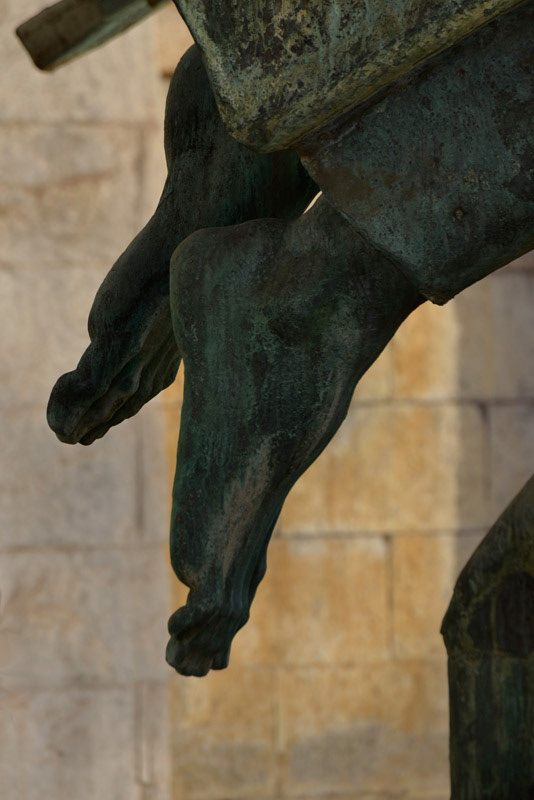
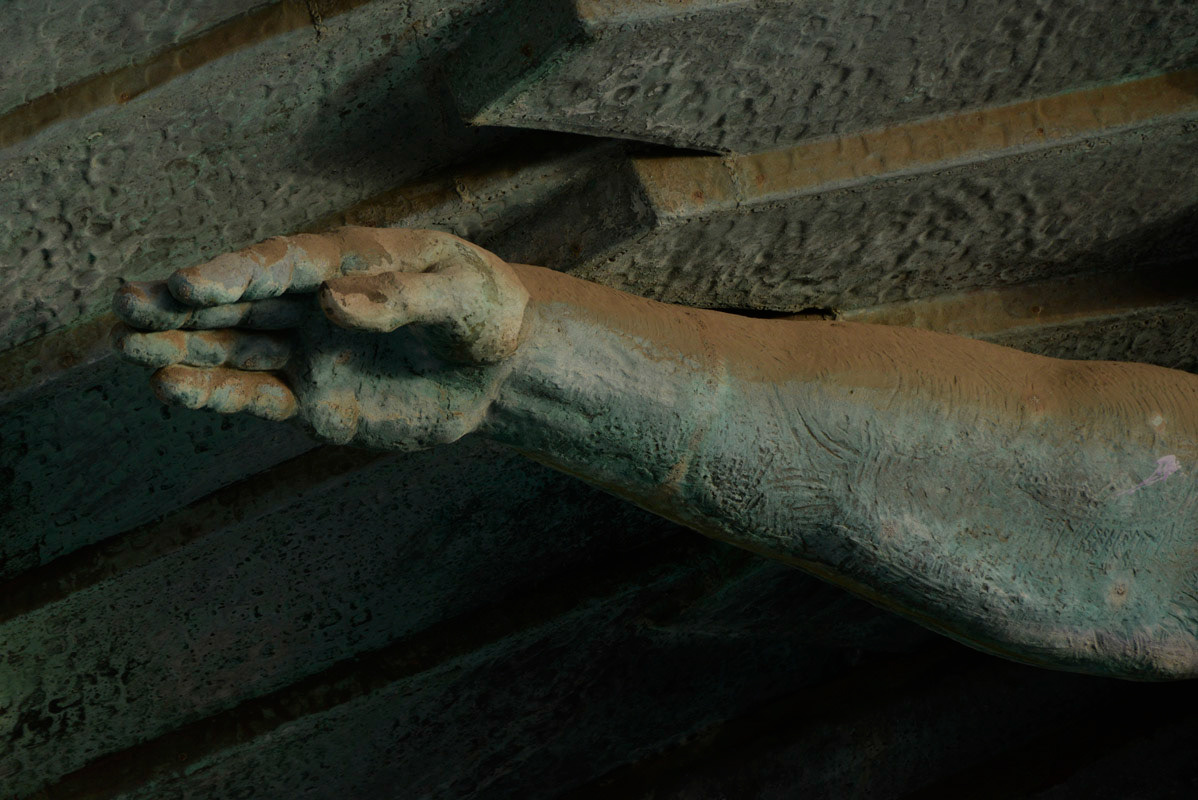
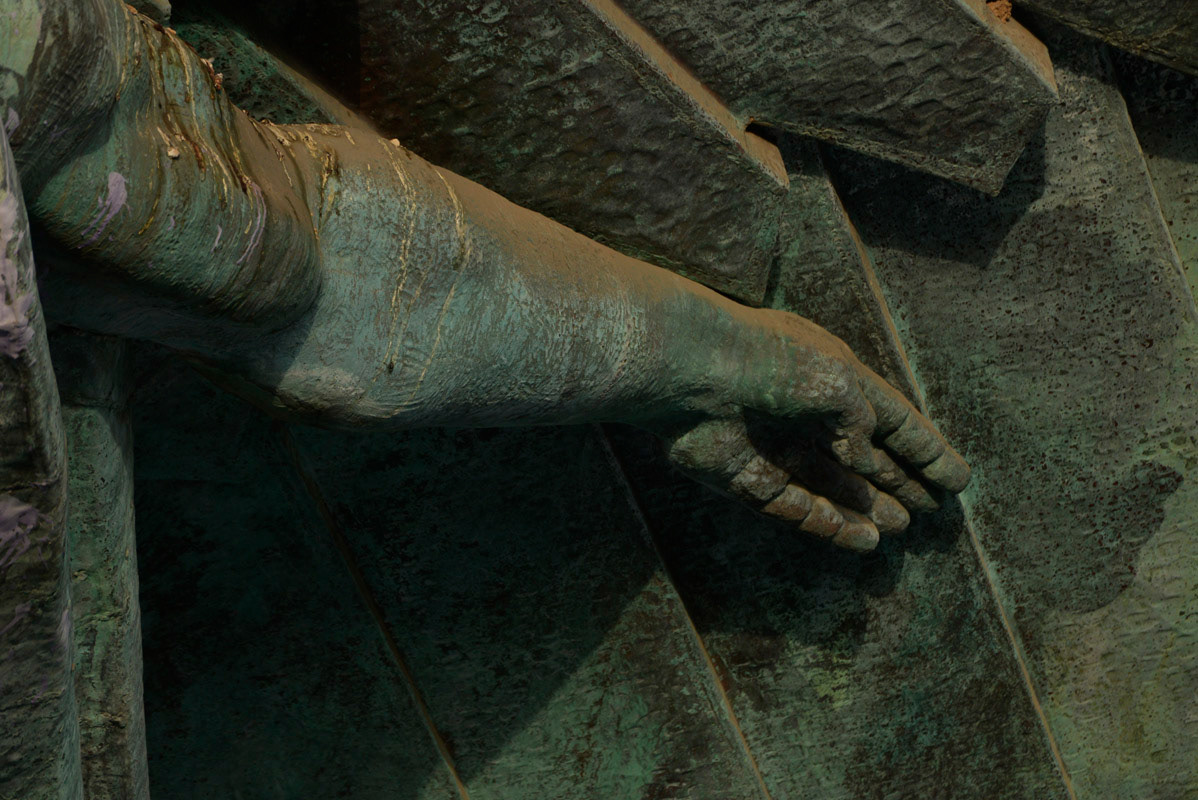
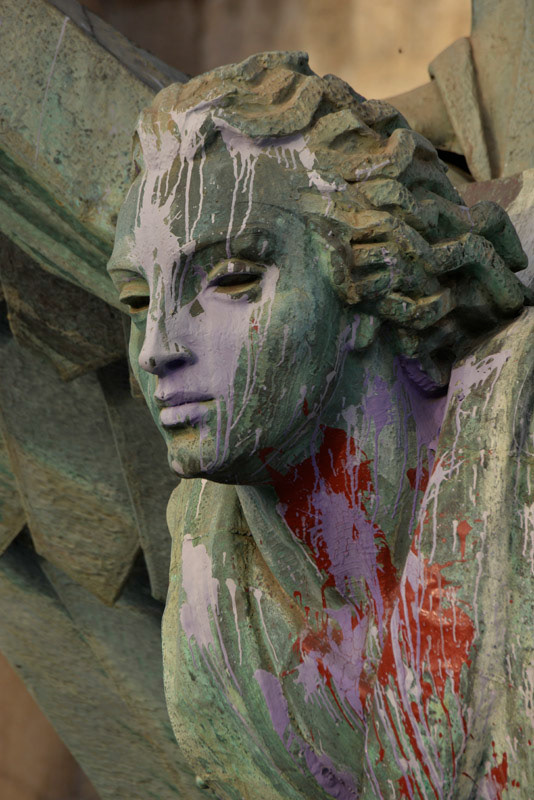
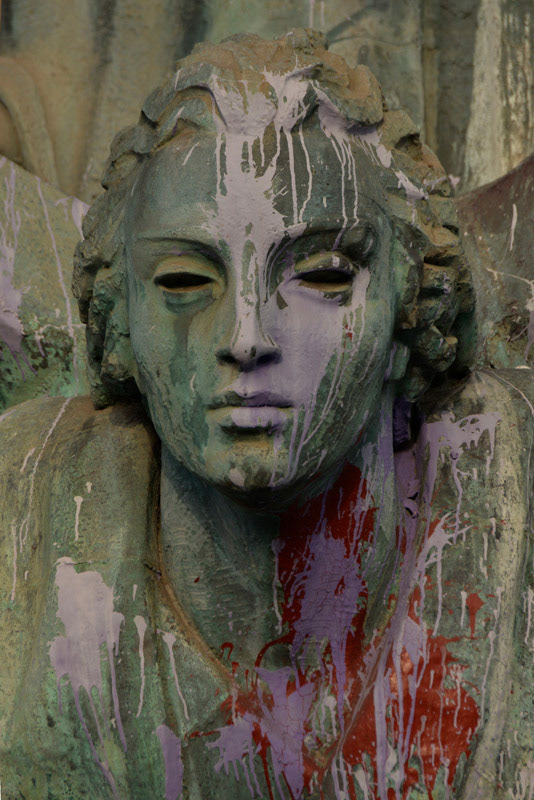
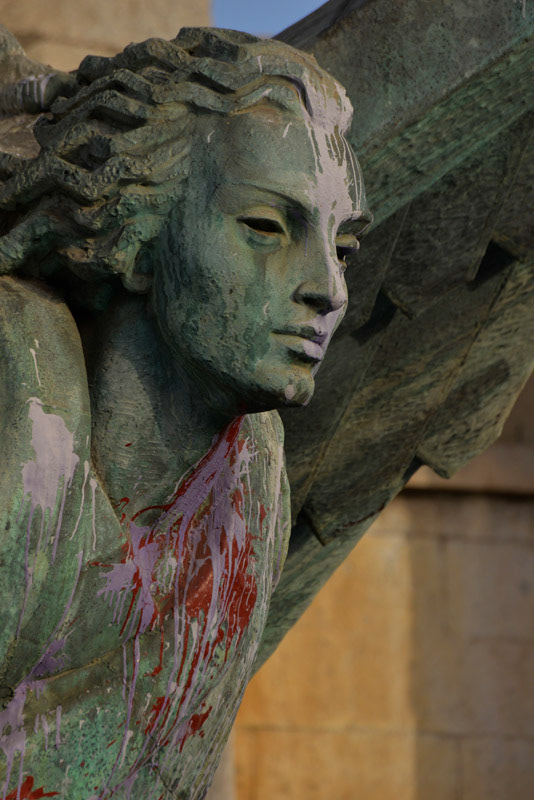
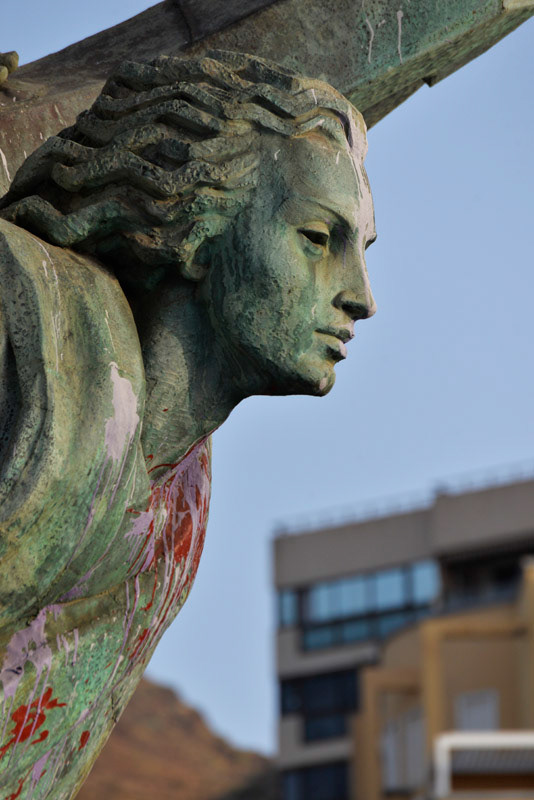
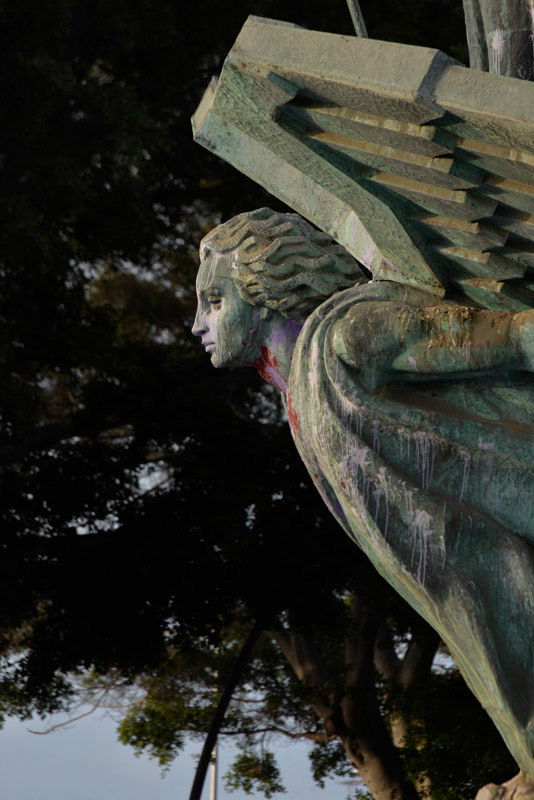
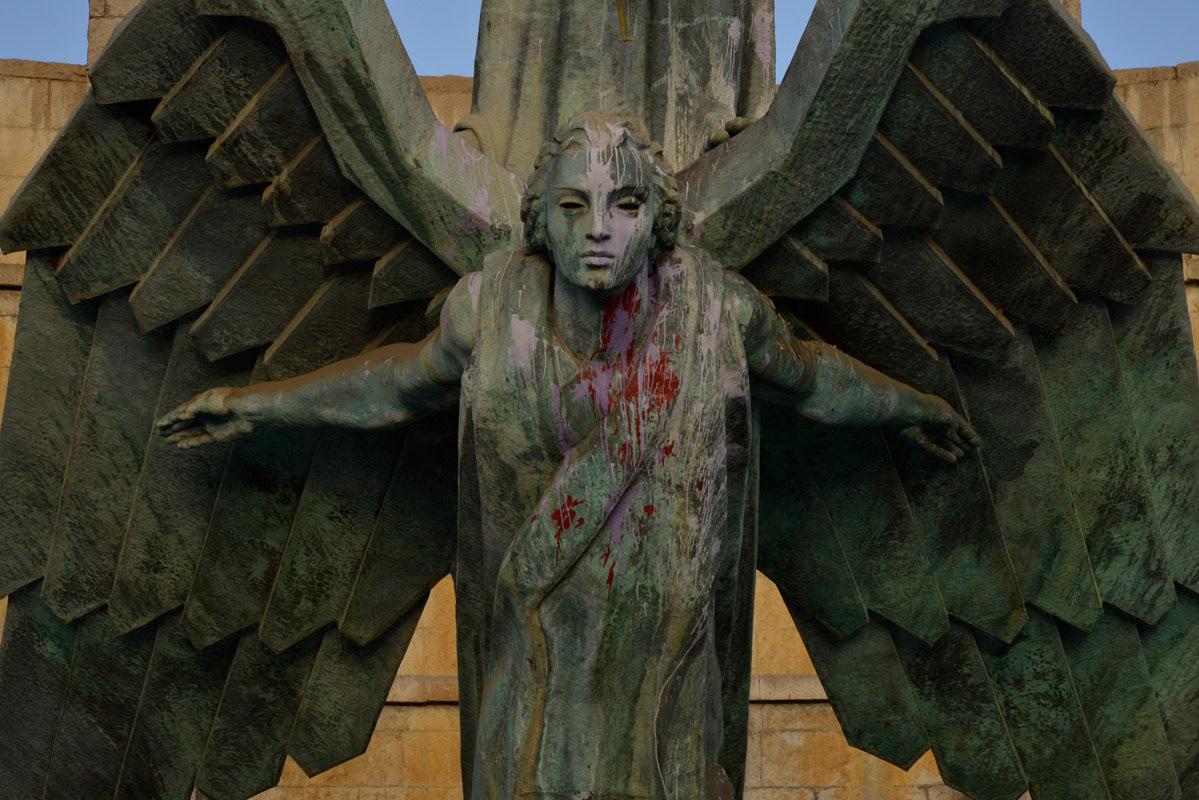
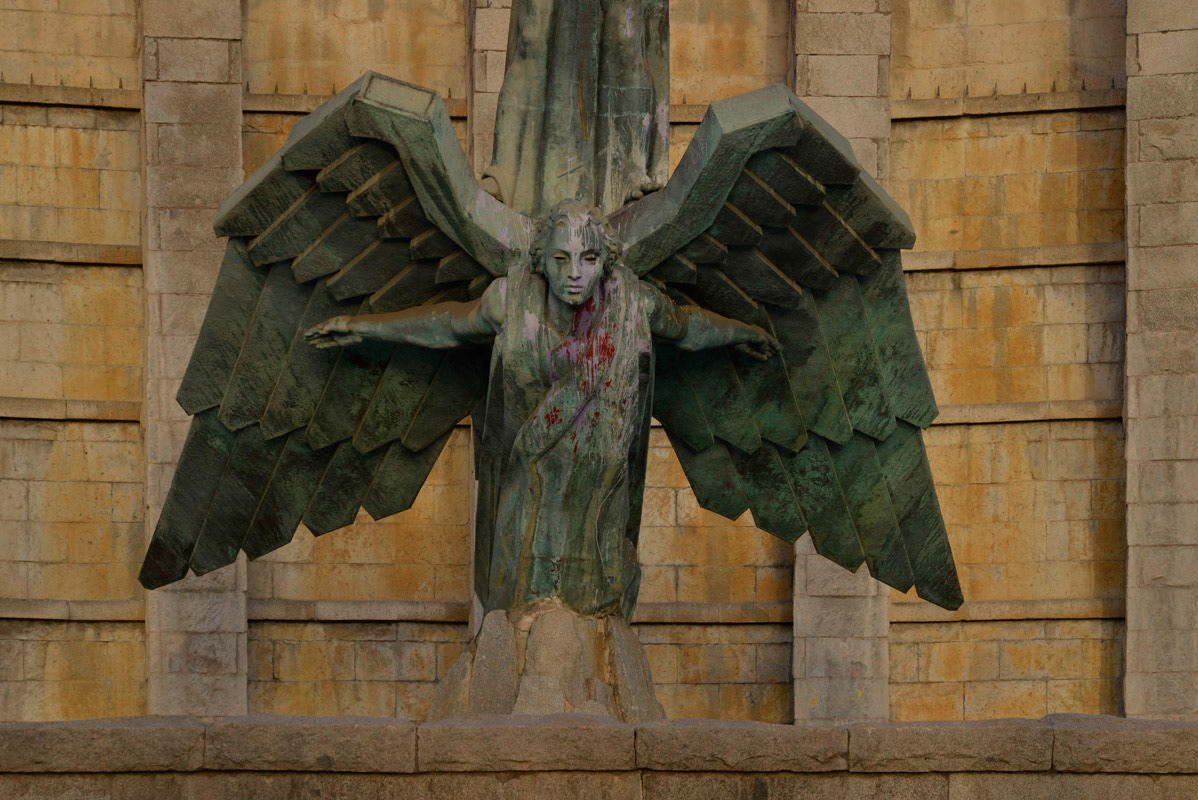
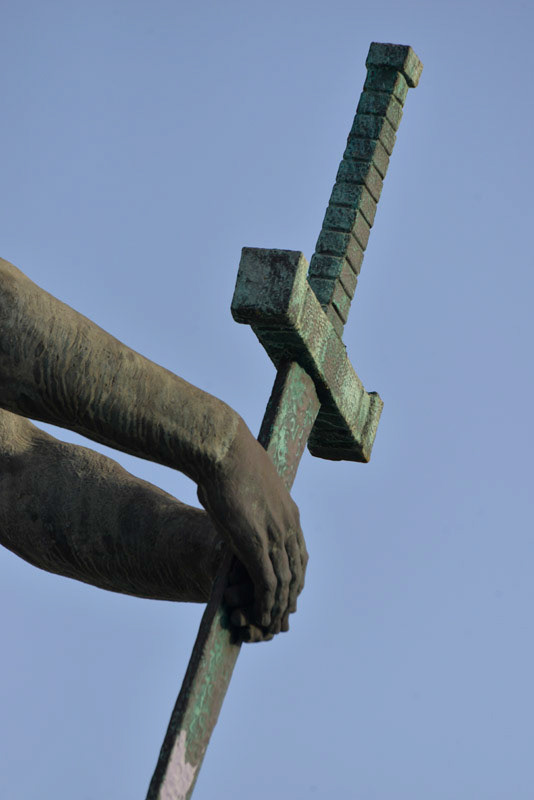
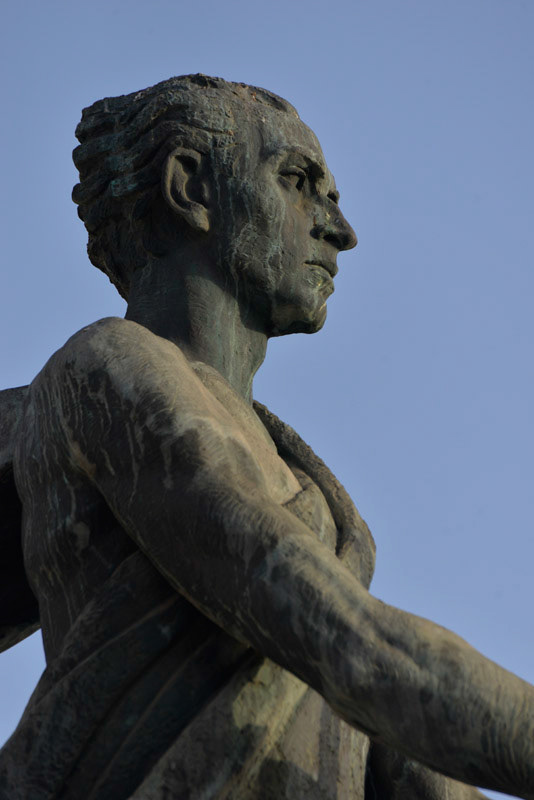
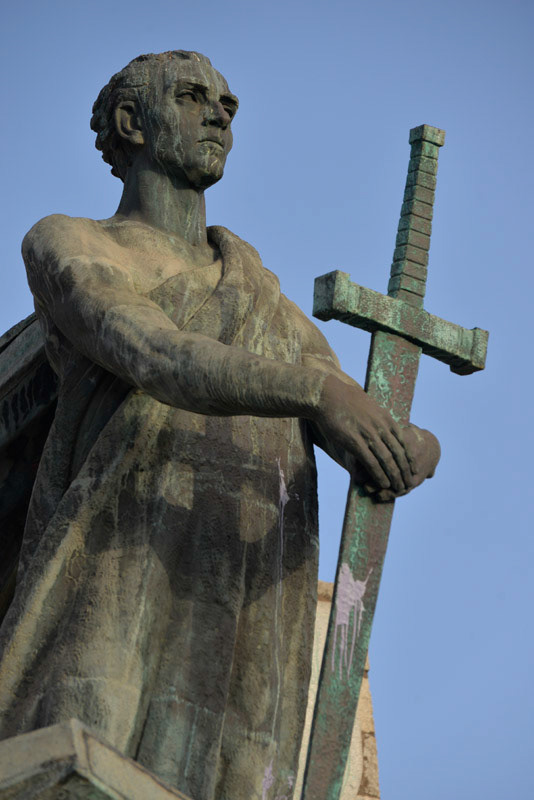
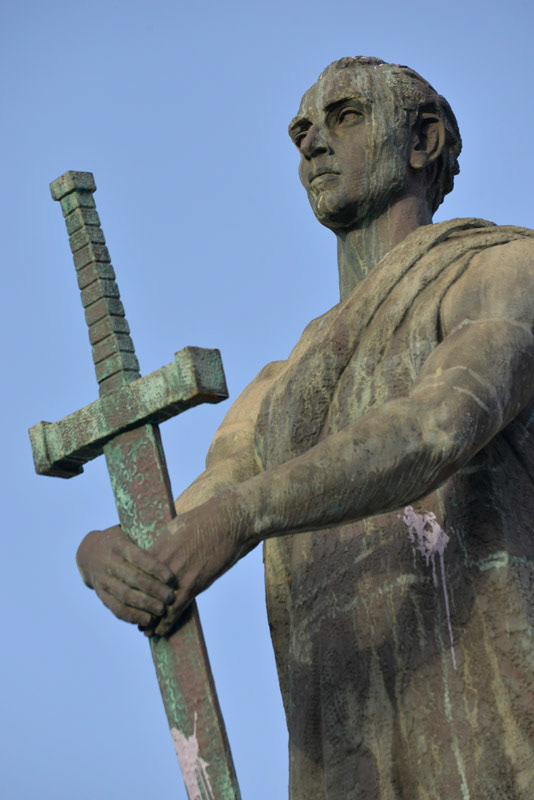
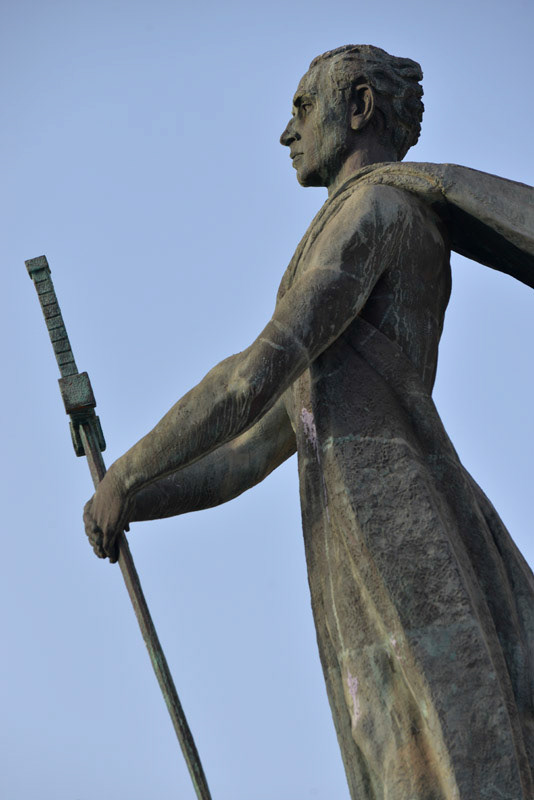
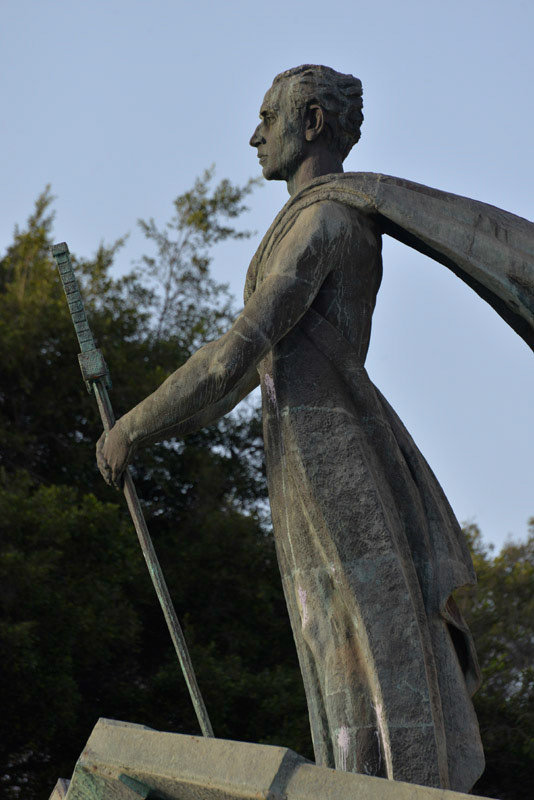
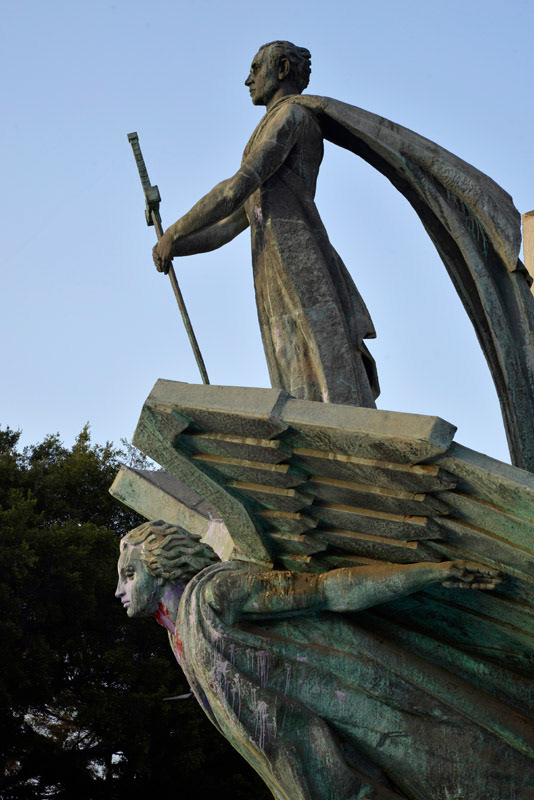
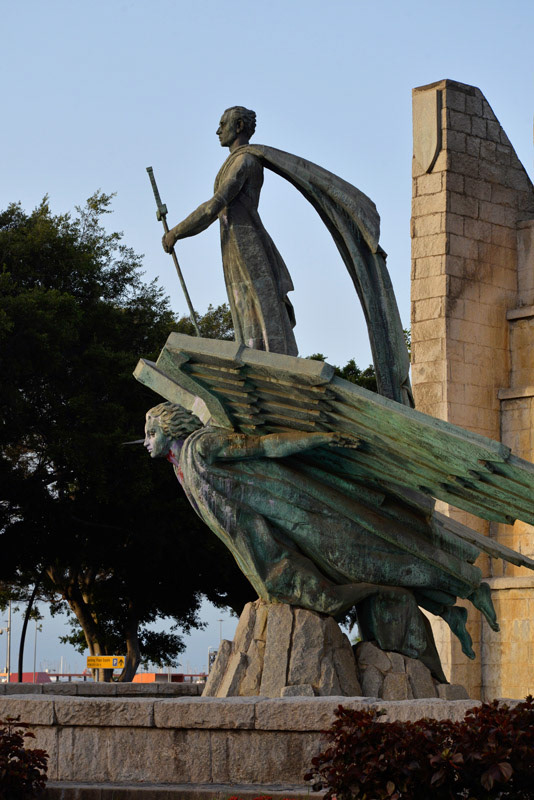
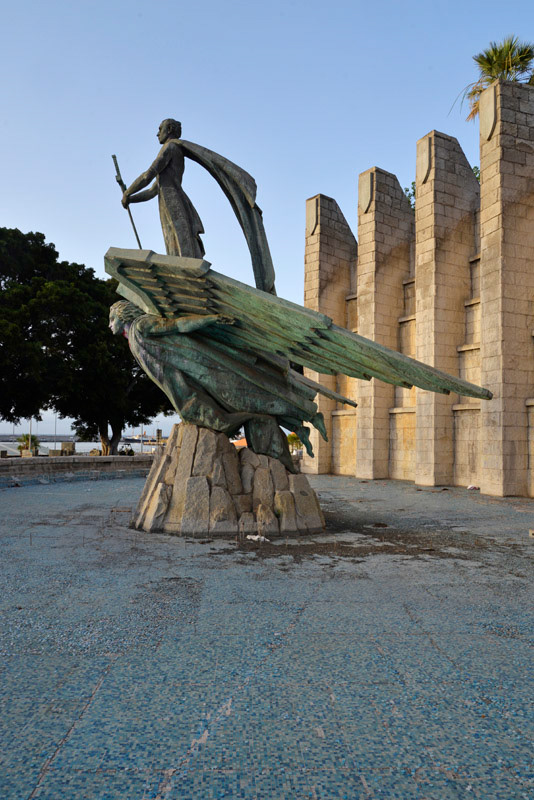
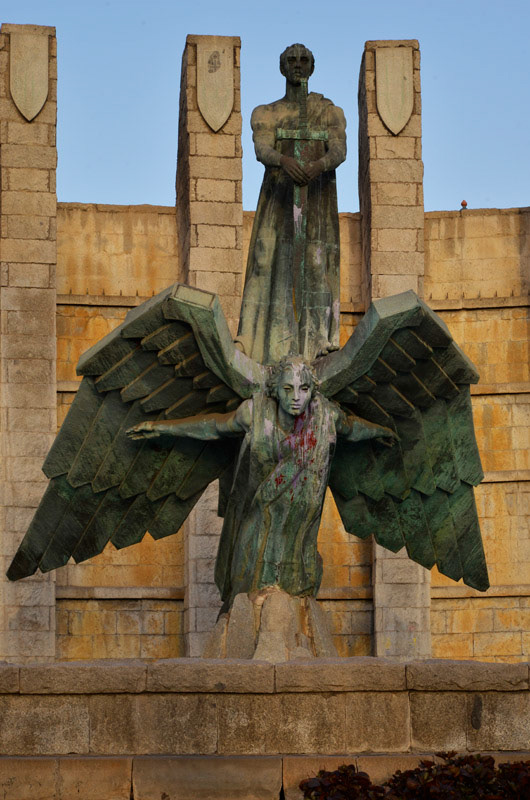
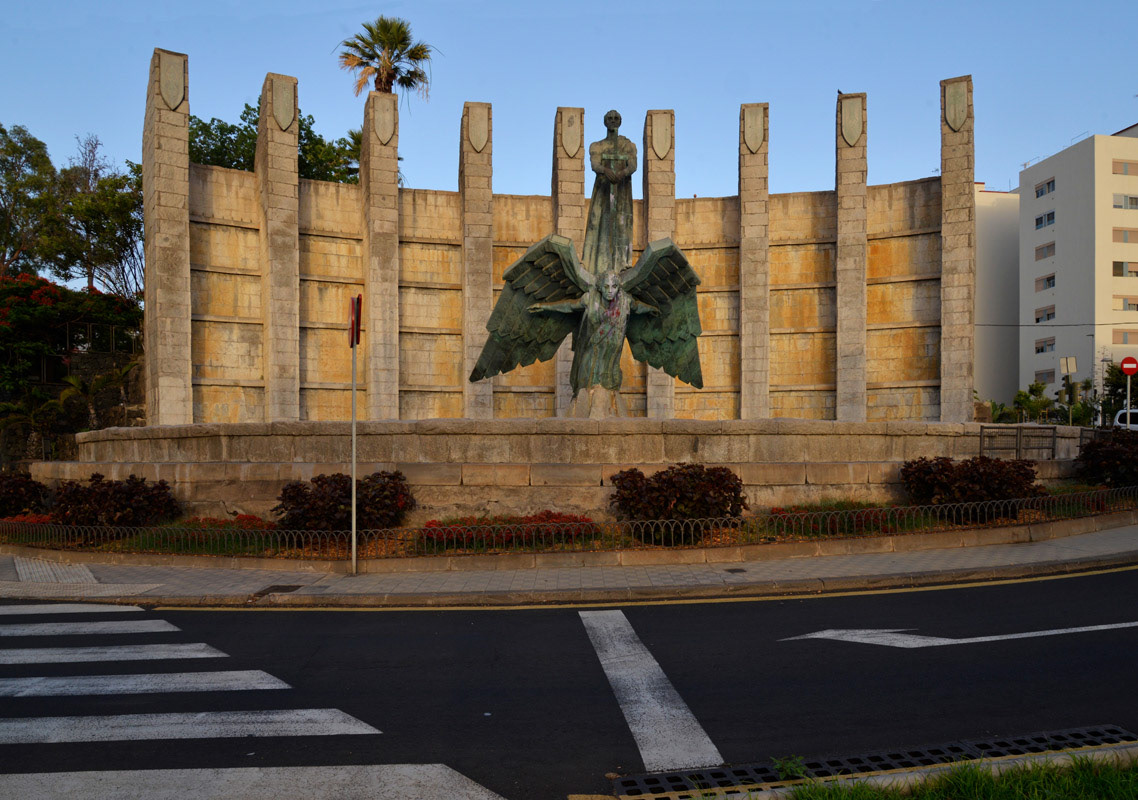
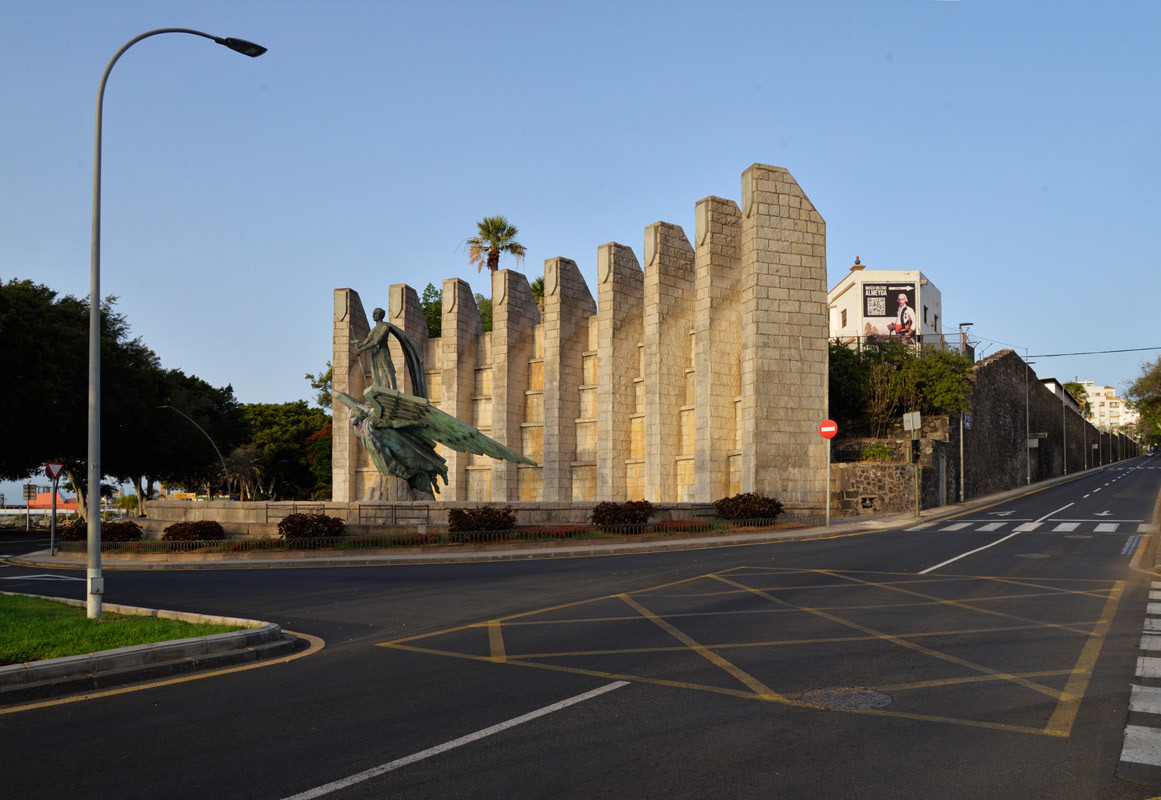
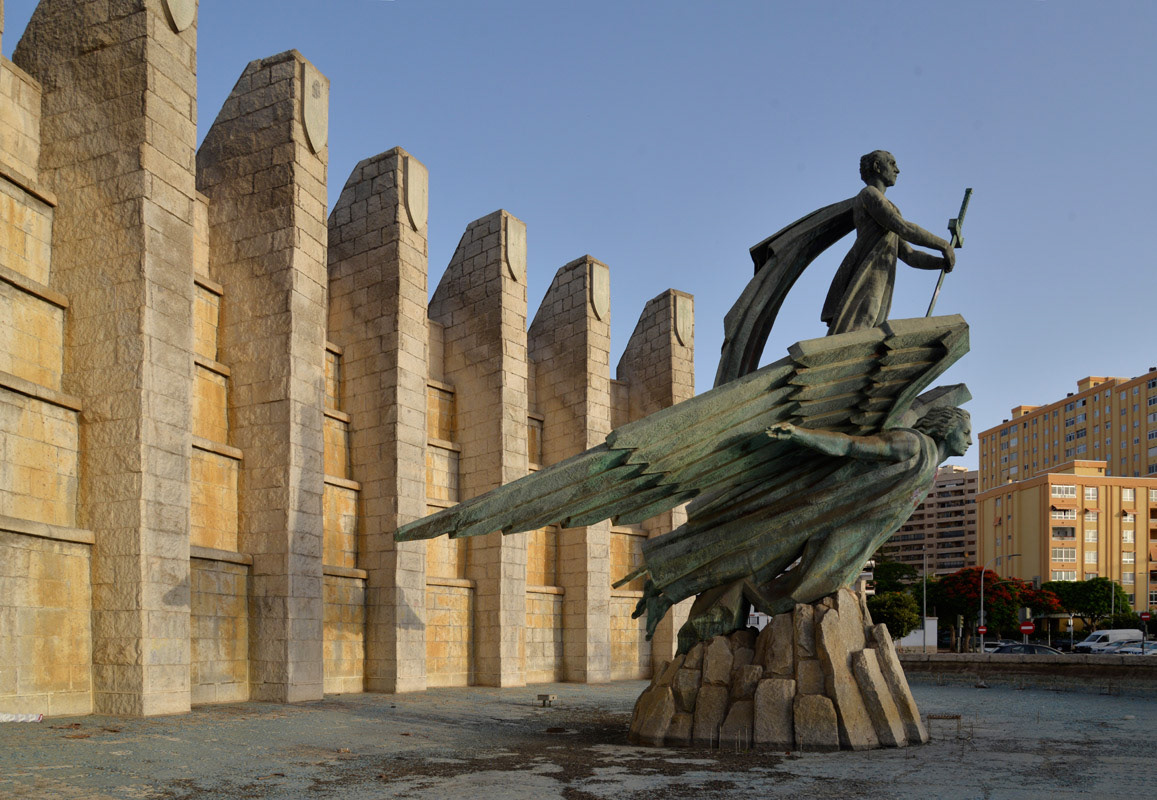
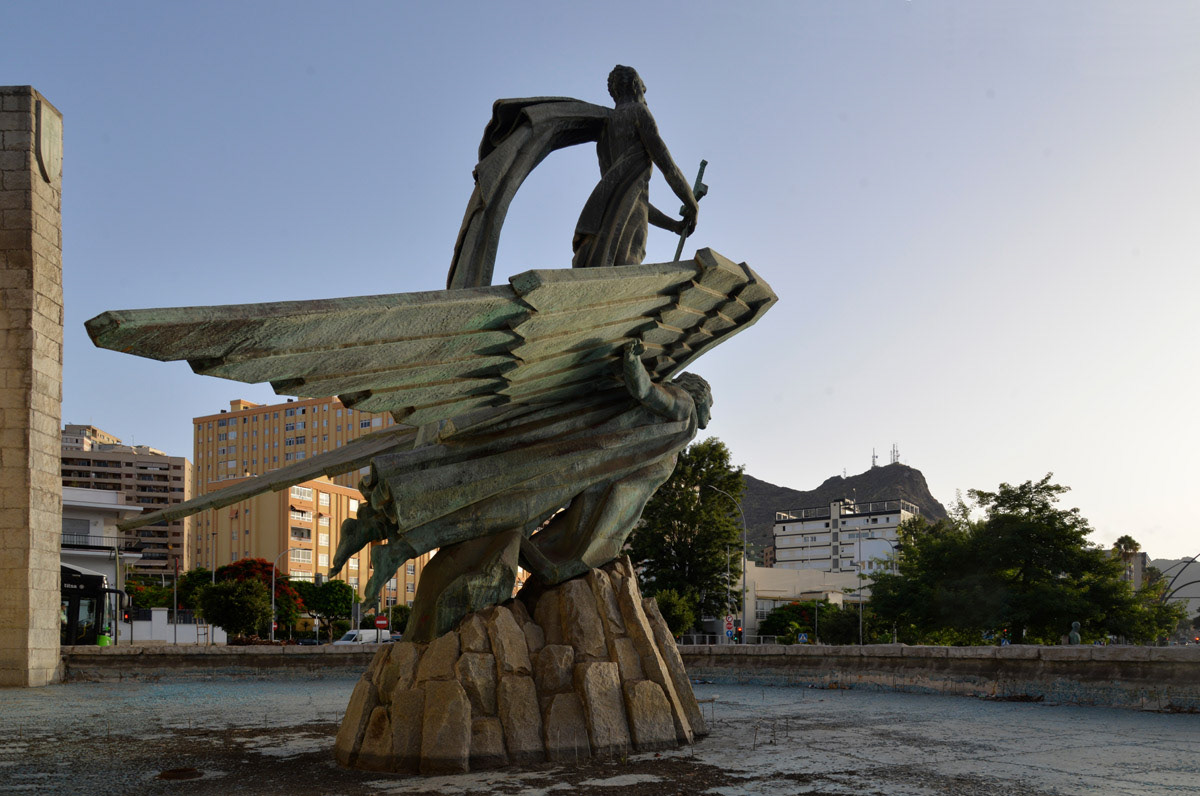
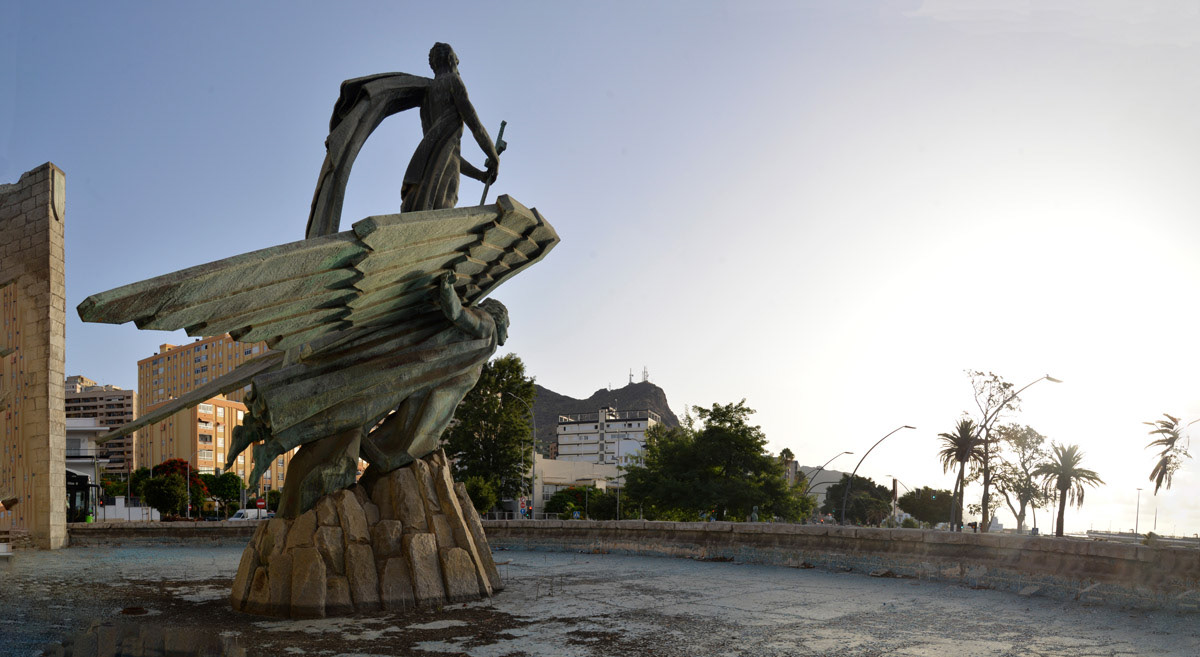
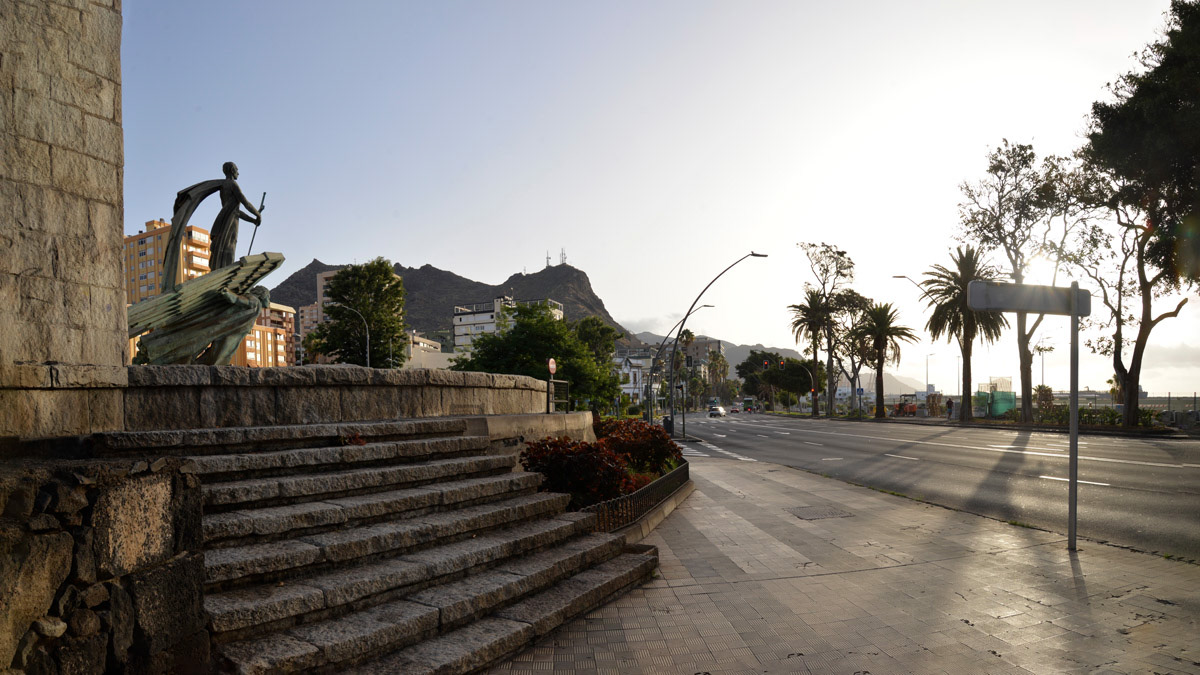
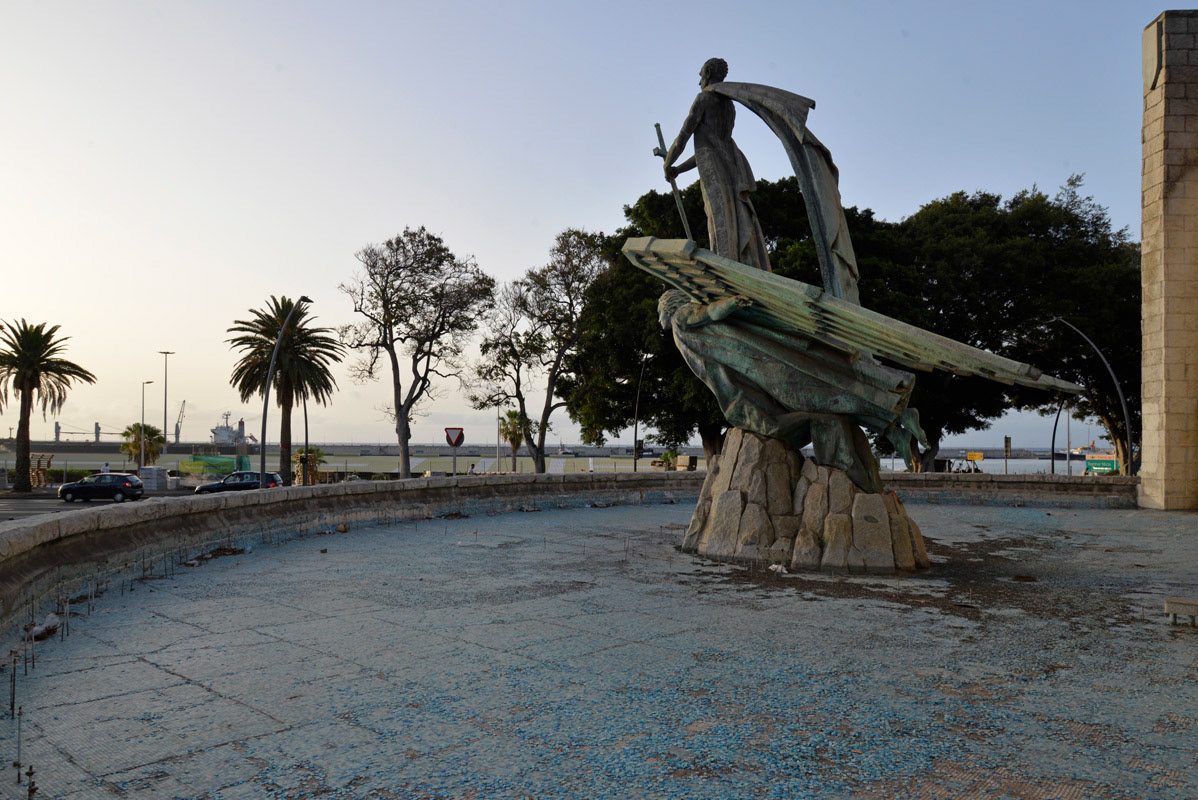
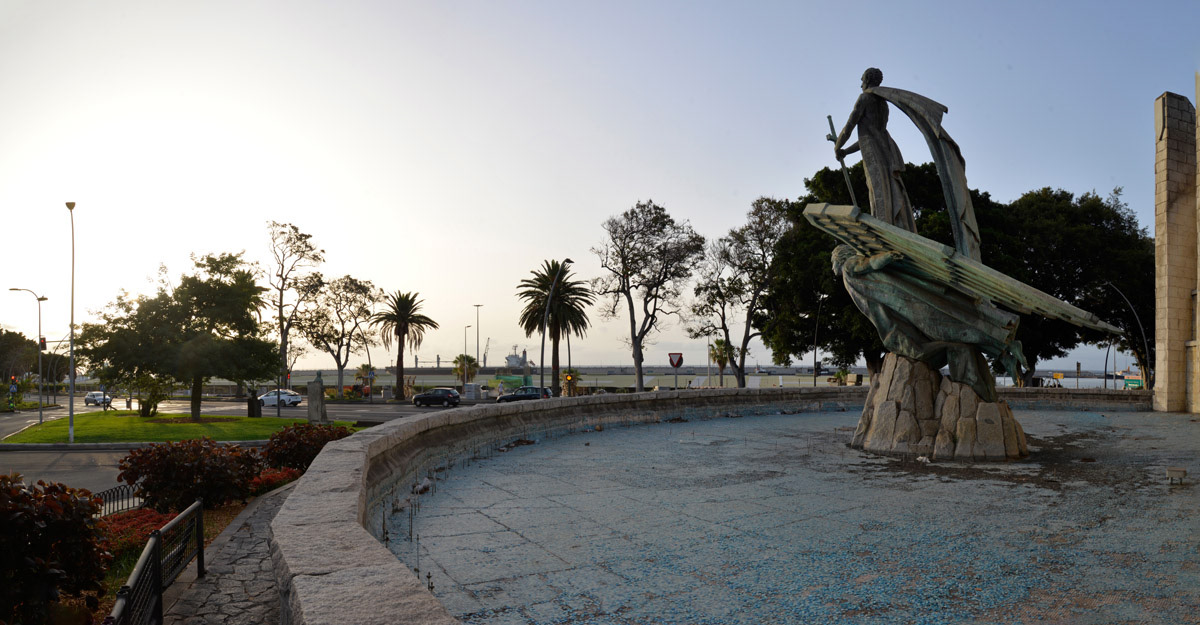
The public monument popularly known as the "Monument to Franco" (historically named “Monumento a Su Excelencia el Jefe del Estado” or “Monumento a la Victoria” and also “Ángel de la Victoria” ) is a major twentieth-century architectural and sculptural installation in Santa Cruz de Tenerife, Spain. Since its construction, the complex has transitioned from a prominent symbol of political regime-building to a focal point of intense legal and ethical debates surrounding memory laws and heritage preservation in contemporary Spain. The monument occupies a highly visible public space at the intersection of the Rambla de Santa Cruz and Avenida de Anaga, adjacent to the historical Fuerte de Almeyda. Commissioned in 1964 and officially inaugurated on March 17, 1966, the project was financed through state funds and approximately 80,000 individual public donations. The complex was designed by Juan de Ávalos, one of the most prolific and state-sanctioned sculptors of the Francoist era, best known for his monumental works at the Valle de Cuelgamuros (formerly Valle de los Caídos) near Madrid. The bronze and granite ensemble features a 14-meter-tall backdrop wall composed of nine interconnected pilasters adorned with regional coats of arms. At its center, a large circular fountain contains a massive winged angel, which serves as an allegorical representation of the Dragon Rapide—the aircraft that flew General Francisco Franco from the Canary Islands to North Africa to initiate the July 1936 military coup. Astride the angel is a male figure representing Franco, holding a downward-pointing sword designed in the shape of a Christian cross. In accordance with Spain’s evolving democratic memory framework, public symbols exalting the military dictatorship are subject to mandatory removal. However, the Tenerife monument became the subject of complex administrative pushback rooted in its argued artistic pedigree.The Bien de Interés Cultural (BIC) Assessment Proponents of preserving the sculpture argued that it held exceptional artistic merit that exempted it from demolition under historical memory laws. To settle this, the regional government initiated an official evaluation to determine if it qualified for maximum legal protection as a Property of Cultural Interest (Bien de Interés Cultural or BIC). Independent technical assessments from academic bodies, including the Universidad de La Laguna, concluded that the structure lacked the unique or exceptional artistic value required for a BIC status. Conversely, groups like the official Architects' Association suggested "re-signifying" the space rather than removing it. On June 11, 2026, the Consejo de Patrimonio Cultural de Canarias formally rejected the BIC status in a landslide 16-to-1 vote. The council ruled that the monument did not possess the heritage values necessary to override democratic memory provisions. Following the denial of heritage protections, the Spanish Ministerio de Política Territorial y Memoria Democrática officially integrated the sculpture into the national catalog of prohibited Francoist vestiges. In late June 2026, the central government issued a strict directive giving the local Ayuntamiento de Santa Cruz de Tenerife a timeline of three to six months to dismantle the monument. Technical committees affirmed that because the piece directly exalts a totalitarian regime, there was no legal margin to leave it in place or attempt a civilian re-signification. To prevent the complete destruction of Juan de Ávalos’ work, the execution plan mandates that the bronze figures and key elements be systematically disassembled. The components will be transferred to a non-public storage facility away from the public sphere, pending the final formalization of the Canary Islands' regional catalog of Francoist vestigis. These photos were taken in July 2026 and show a selection of views of the “Monument to Franco” in Santa Cruz de Tenerife. Generative AI was used in the process of drafting this text.